Visualizzazione post con etichetta Navajo. Mostra tutti i post

sabato 28 gennaio 2012

Trade Beads

Vecchio Campionario di perline per il commercio
Il 12 Ottobre 1492 Cristoforo Colombo registra nel suo diario di bordo che ai nativi di San Salvador "sono stati dati cappelli rossi e perline di vetro". Questa è la più antica registrazione relative alle perline di vetro in America. L'esploratore Spagnolo Hernando Cortés sbarcò sulle coste del Messico nella primavera del 1519. La sua nave trasportava perline di vetro insieme ad altri prodotti europei per il commercio. Gli esploratori spagnoli Narvaéz nel 1527 e De Soto nel 1539 trasportavano perline di vetro per commerciare con i nativi abitanti della Florida.  Nel 1622 una fabbrica per la lavorazione del vetro fu costruita vicino Jamestown, Virginia. Meno di un anno dopo, una spedizione di nativi bruciò la fabbrica. Pochissime delle perline realizzate nella fabbrica di Jamestown sono ancora esistenti. I primi conquistatori spagnoli e i primi preti viaggiarono dalle Florida Keys alla California. Nel 1741, i russi raggiunsero le coste dell'Alaska e da lì scesero giù lungo la costa ovest dell'America. Un commerciante della North Western Company, Alexander Mackenzie, attraversò il Canada fino all'Oceano Pacifico, nel 1793. Tutti questi esploratori, come anche David Thompson e la spedizione di Lewis e Clark, trasportavano perline di vetro come regali e come mezzo di scambio con i Nativi Americani. Il prezzo delle perline variava con i luoghi, la richiesta, e con quanto intensamente i nativi volessero un particolare tipo delle stesse. Durante il commercio delle pellicce di castoro, la Hudson's Bay Company, compagnia importantissima per la stessa storia dell'America del Nord, usava un valore standard basato su una pelliccia finita, una pelliccia cioè stirata sul telaio, asgiugata e pronta per la spedizione. I libri contabili dei più antichi Trading Post registrano che una pelliccia di castoro era scambiata per sei perline Hudson's Bay, tre Padre beads turchesi e due perline grandi blu trasparente. Altre piccole informazioni storiche si ricavano dai reperti di trade beads trovati nei siti archeologici. La Hudson's Bay ha superato tre secoli di attività in Nord America ma i registri sulle tipologie e le descrizioni delle trade beads non sono sopravvissuti nei suoi archivi.
------------------------------------------
October 12, 1492, Columbus recorded in his logbook the natives of San Salvador Island were given red caps and glass beads. This is the earliest written record of glass beads in the Americas. The Spanish explorer Hernando Cortéz landed on the coast of Mexico in the spring of 1519. His ships carried glass beads along with other European trade goods. The Spanish explorers Narváez in 1527 and De Soto in 1539 carried glass beads for trade with the native inhabitants of Florida. In 1622, a glass factory was built near Jamestown, Virginia. Less than a year later, a raiding party of Indians burned the factory. Very few of the beads made in the Jamestown factory are believed to exist today. Early Spanish Conquistadors and Priests traveled from the Florida Keys to California. In 1741, the Russians reached the coast of Alaska and from there down the western coast of North America. A North West Company trader, Alexander Mackenzie, crossed Canada to the Pacific Ocean in 1793. All of these explorers, as well as David Thompson and the Lewis and Clark Expedition, carried glass beads for presents and as a medium of exchange in dealing with the American Indians. Bead prices varied with location, demand, and how bad Indians wanted a particular bead. When trading for beaver pelts, the Hudson's Bay Company used a standard value based on made beaver...a made beaver was stretched, dried, and ready for shipment. Records from early trading posts show a made beaver was worth: six Hudson's Bay beads; three light blue Padre (Crow) beads; two larger transparent blue beads. Little historical information is available on the majority of trade beads discovered in archeological sites. The Hudson's Bay Company has celebrated over three hundred years in North America, but the records on types and descriptions of trade beads, along with invoices, and sources of supply have not survived in the Hudson's Bay archives. 


A seguire alcune perline seme Veneziane di fine '800 dono dell'amica e maestra Angela Swedberg


domenica 22 gennaio 2012

Le Piume di Dio


Copricapo in piume d'aquila appartenuto a Yellow Calf -ora al British Museum
Una Leggenda Lumbee
"In principio, il Grande Spirito diede agli animali e agli uccelli la sapienza e il potere di parlare con gli uomini. Egli mandò queste creature all'uomo per mostrarsi attraverso di esse. Loro avrebbero insegnato ad un prescelto le canzoni e le danze sacre, così come tutti i riti e le tradizioni. La creatura più amata dal Grande Spirito era l'aquila, e attraverso essa Egli  raccontò la storia della vita. L'aquila, come sapete, ha solo due uova, e tutte le cose viventi del mondo sono divise in due. Uomo e donna, maschio e femmina e questo è vero per tutti gli animali, gli uccelli, gli alberi  i fiori e così via. Tutte le cose sono figlie di questi due principi in modo che la vita possa continuare. L'uomo ha due occhi, due mani, due piedi ed ha anche un corpo ed un anima, una sostanza ed un ombra.Attraverso i suoi occhi, vede scene piacevoli e spiacevoli, attraverso le sue narici gli odori buoni e cattivi, con le sue orecchie sente le notizie liete e le parole che lo rendono triste. La sua mente è divisa tra il bene e il male. La sua mano destra può essere usata per il male, per la guerra o per colpire una persona in collera. Ma la sua mano sinistra, che è vicino al suo cuore, è sempre piena di gentilezza. Il suo piede destro può condurlo in una strada sbagliata, ma il suo piede sinistro lo porta sempre sulla via giusta. L'uomo è luce e tenebre, estate e inverno, pace e guerra, la vita e la morte. Per ricordare questa lezione di vita, guardate la grande aquila, l'uccello preferito del Grande Spirito. La piuma d'aquila è divisa in due parti, una parte è luce e l'altra oscurità. La piuma rappresenta la luce del giorno e le tenebre, l'estate e l'inverno, la pace e la guerra, la vita e la morte. Così per ricordare ciò che ho detto, osservate bene l'aquila e le sue piume, esse raccontano la storia della vita. Guardate le piume che tengo in mano, quella a destra è grande e perfetta ed è decorata, questa rappresenta l'uomo. Quella nella mia sinistra è piccola e semplice, essa rappresenta la donna. Figli miei, ricordate quello che dico. Perché siete VOI che sceglierete la via da seguire nella vita - la via giusta o quella sbagliata".
-----------------------------------
A Lumbee Legend
"In the beginning, the Great Spirit above gave to the animals and birds wisdom and knowledge and the power to talk to men. He sent these creatures to tell man that he showed himself through them. They would teach a chosen man sacred songs and dance, as well as much ritual and lore. The creature most loved by the Great Spirit was the eagle, for he tells the story of life. The Eagle, as you know, has only two eggs, and all living things in the world are divided into two. Here is man and woman, male and female and this is true with animals, birds, trees, flowers and so on. All things have children of two kinds so that life may continue. Man has two eyes, two hands, two feet and he has a body and soul, substance and shadow.Through his eyes, he sees pleasant and unpleasant scenes, through his nostrils he smells good and bad odors, with his ears he hears joyful news and words that make him sad. His mind is divided between good and evil. His right hand he may often use for evil, such as war or striking a person in anger. But his left hand, which is near his heart, is always full of kindness. His right foot may lead him in the wrong path, but his left foot always leads him the right way, and so it goes; he has daylight and darkness, summer and winter, peace and war, and life and death. In order to remember this lesson of life, look to the great eagle, the favorite bird of the Great Spirit. The eagle feather is divided into two parts, part light, and part dark. This represents daylight and darkness, summer and winter, peace and war, and life and death. So that you may remember what I have told you, look well on the eagle, for his feathers, too, tell the story of life. Look at the feathers I wear upon my hand, the one on the right is large and perfect and is decorated; this represents man. The one on my left is small and plain; this represents woman. The eagle feather is divided into two parts, dark and white. This represents daylight and darkness, summer and winter. For the white tells of summer, when all is bright and the dark represents the dark days of winter. My children, remember what I tell you. For it is YOU who will choose the path in life you will follow -- the good way, or the wrong way".
Piume, ermellini e base in pelle per un copricapo che sto realizzando


martedì 13 dicembre 2011

Work in progress


Un aggiornamento sul progresso del lavoro. Decorare a perline richiede molta pazienza. Una specie di meditazione.
----------------------------------------------------
Work in progress. Beadworking needs a lot of patience. Kind of a meditation.


domenica 11 dicembre 2011

Le Armi e le Insegne

Frusta Crow - 1880 -

Un artwork di Angela Swedberg
Fra molti popoli Nativi, e specialmente nel Nord Ovest del Paese, era diffuso l'utilizzo di un particolare tipo di frusta detta in inglese Antler quirt. Essa era ricavata dal corno di un cervo che era prima lucidato e poi lentamente inciso secondo una tecnica che sarebbe stata detta solo successivamente Scrimshaw. La tecnica prevedeva di realizzare i motivi scelti praticando delle incisioni di pochi millimetri e di poi riempire le stesse con del materiale colorante misto a colla animale o grassi, in modo da far meglio risaltare il disegno.
Nel Plateau, ma anche frai Crow, era poi uso comune quello di aggiungere una fascia in pelle riccamente decorata al fine di meglio impugnare l'attrezzo ed ottenere un effetto maggiore.
I Nativi generalmente non usavano la frusta per colpire il cavallo, quanto piuttosto per farla schioccare in aria per incitarlo, ma qualunque fosse l'utilizzo essa era un forte indicatore dello status sociale del suo proprietario. E per questo per realizzarla erano usati materiali pregiati e lo stesso corno per una buona frusta doveva provenire solo da quella specie particolarmente imponente di cervo che i bianchi avrebbero poi chiamato Washington deer. Questa a seguire è una frusta su cui sto lavorando.


--------------------------------------------
Among many Native peoples, and especially in the North West of the country, was common a particular type of whip known as Antler quirt. It was made ​​from the horn of a deer that was first polished and then slowly etched according to a technique that would be known only later as Scrimshaw. The technique involved to realize the motifs by practicing a few millimeters incisions and then to fill it with coloring material mixed with animal glue or grease, to better highlight the design.
In the Plateau, but also among the Crow, was also common to add a beaded leather band in order to better grasp the whip and get a stronger effect.
Natives generally did not use the whip to hit the horse, but rather to make it pop up in the air to
encourage the horse, but whatever was the use it was a strong indicator of the social status of its owner. And for this high-quality materials were used and the same horn for a good whip should only come from a particularly impressive deer species that whites would then called Washington deer. This is an antler quirt I'm still working on.


domenica 4 dicembre 2011

Puzzle Bag


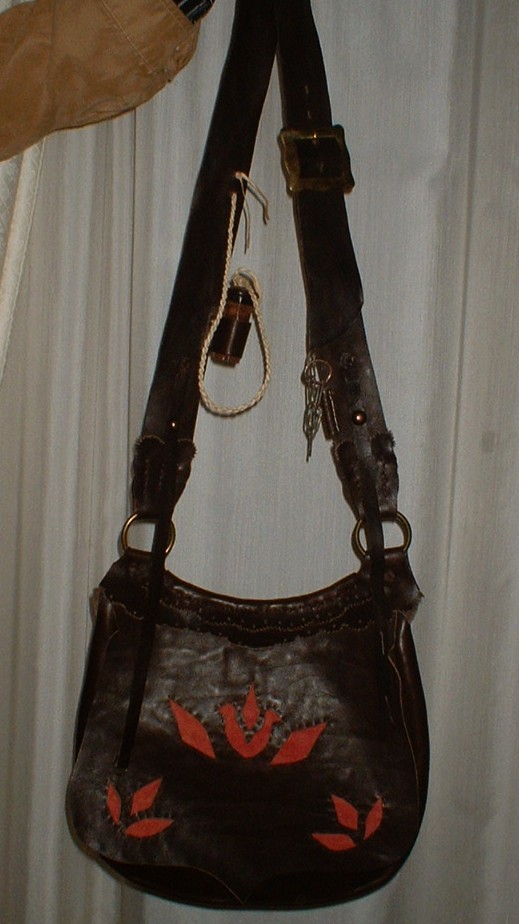
Ecco un altra borsa nello stile utilizzato sul finire del 700 negli States. Erano borse dette anche "German bags" perchè la loro origine era in Germania o " Puzzle bags" perchè costruite assemblando diversi strati di pellami.
Questa in particolare ha le due cinghie a cui andava appeso il corno per la polvere da sparo nonchè un dosatore per la stessa polvere ed un attrezzo in ferro forgiato per la pulizia del punto in cui avveniva l'innesco nel fucile. Il tutto era fissato alla tracolla della borsa per poter ricaricare più velocemente il fucile ad avancarica.

-------------------------------------

Here's another bag in a style common at the end of the 700 in the States. These bags were also called "German bags" 'cause their origin was in Germany or "Puzzle bags" because they were built by assembling several layers of leather.
This particular one has two straps to hang on the gunpowder horn as well a powder measure and an iron forged a tool to clean the seat of the flint on the muzzle-loading rifle . Everything was fixed to the strap of the bag to re load faster.

martedì 18 ottobre 2011

Il Gioco degli Angeli


Fra il '700 e l'800, quando la popolazione iniziò a crescere nel numero e gli insediamenti a svilupparsi, gli emigranti inglesi e tedeschi portarono sulle nuove colonie americane quelle che erano le tradizioni artigianali già presenti nei rispettivi paesi di origine. Fra queste l'arte e gli stili della lavorazione delle borse in cuoio destinate alla caccia. Questa mia borsa riprende un originale creato da un grande artista americano sullo stile di quelle usate sul finire del '700 sui nuovi territori americani. Il nome della borsa è: Angels Game.

Un grazie speciale va ai miei due modelli di eccezione: Josey e Cappy!

------------------------------------

Between '700 and '800, when the population began to grow in number and the settlements to develop, the British and German immigrants brought in the new American colonies the craft traditions they already had in their countries. Among these styles of art and workmanship there were the so called hunting bags or pouches. This my bag is made starting from an original one made by a great American artist in the style of those used at the end of '700 on the new American territories. Its named: Angels Game.

A special thanks goes to my two very special models: Josey and Cappy!

venerdì 7 ottobre 2011

Ancora foderi...


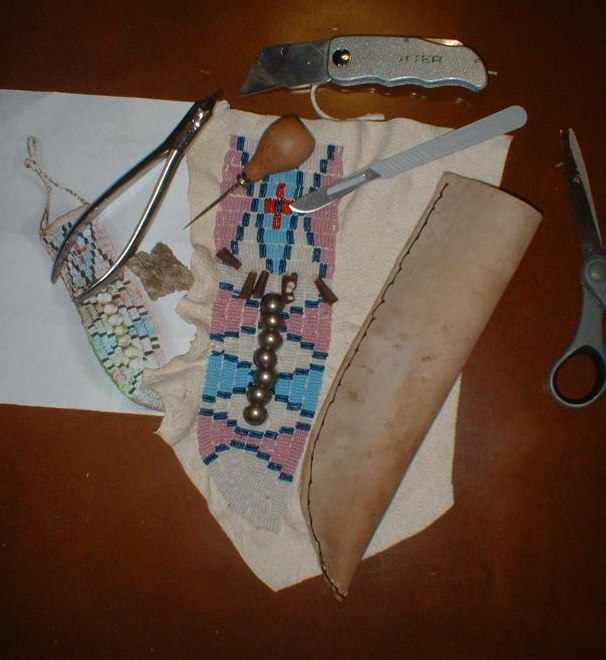
Alcune fasi nella realizzazione della replica di un fodero originale. L'interno è in cuoio mentre l'esterno, decorato a perline, è in pelle a concia Indiana. All'inizio della pagina alcuni foderi realizzati da Angela Swedberg.
-----------------------

Some steps in the making of a knife sheat replica. The case inside is made with raw hide while the beaded case is made with brain tanned hide. At the top of the page some knife sheaths made ​​by Angela Swedberg


mercoledì 24 agosto 2011

Coltelli Indiani

 Dagger Sheat

Una serie di coltelli e foderi realizzati secondo le tecniche proprie degli Indiani d' America.
Alcuni sono originali mentre altri sono repliche o prodotti originali di altissima qualità che è possibile vedere (ed eventualmente acquistare direttamente dagli artisti) su questo sito: 
http://contemporarymakers.blogspot.com/
----------------------------------

A series of knives and blades made according to the Native People techniques. Some are original while others are replicas or originals of the highest quality. You can see these and other knives (and purchase them directly from the artists) on this site:
http://contemporarymakers.blogspot.com/


mercoledì 3 agosto 2011

Iniskim, la Roccia che Chiamò il Bisonte


Una tradizione Blackfoot: 

"Anche se la nostra gente aveva iniziato a vivere nel modo in cui i Makoyi (i lupi) ci avevano mostrato, la vita era ancora molto dura ed il popolo soffriva spesso la fame. Un giorno Iinii (il Bisonte) ebbe pietà della nostra gente.  Fu così che una donna chiamata Donnola, mente stava raccogliendo l'acqua da un fiume vicino il campo,  sentì qualcosa chiamarla dai cespugli. Guardando meglio scoprì che a parlarle era una pietra. La pietra le spiegò come essa stessa potesse essere usata in una cerimonia che avrebbe attirato i bisonti verso un pisskan (dirupo dal quale erano fatti cadere giù). Donnola prese Iniskim, la Pietra che Chiama il Bisonte, e la portò al campo. La donna raccontò ai leaders spirituali della cerimonia per chiamare i bisonti. Il popolo seguì le sue istruzioni e presto ebbe una grande quantità di carne per nutrirsi e nuove pelli per le sue tende. Ci sono molti Iniskim nella Prateria. Molte persone li conservano ancora in involucri sacri. Noi invochiamo l'Iniskim perchè ci aiuti ad avere successo nella vita".

L'Iniskim è una pietra fossile (Ammolite) la cui forma ricorda un bisonte.

------------------------------

 "Although our people began to live as Makoyi (wolves) had shown them, life was still very hard and the people were often hungry. One day Iinii (buffalo) took pity on our people.  A lady named Weasel Woman was collecting water from a river near her camp when she heard something calling to her from the bushes. When she looked closer, she found a stone that spoke to her. The stone explained how it could be used in a ceremony that would call the buffalo towards a pisskan (buffalo jump). Weasel Woman took the Iniskim, the buffalo calling stone, back to camp. She told the spiritual leaders about the ceremony to call the buffalo. The people followed her instructions and soon they had plenty of meat and many hides for new lodge covers.  There are numerous Iniskim on the prairies. Many people still keep them as sacred bundles. We call on iniskim to help us have successful lives".

The Iniskim is a fossil stone (Ammolite) whose shape resembles a buffalo.

Una borsa da me realizzata per la mia Iniskim

a bag I made for my Iniskim, a gift from a very dear friend


sabato 23 luglio 2011

La Memoria Al Petto

Amuleto proveniente dalle Pianure del Nord

forma "a diamante"

Un mio amuleto "a diamante" . E' realizzato con pelle a concia Indiana, ermellino, perline seme di inizio '900, perle "Prosser" e in ottone. Ho realizzato il motivo al centro pensando ad una amica.

--------------------

A fetish I made in a "diamond" shape. It's made with brain tanned hide, ermine strips, old seed beads, "Prosser" beads and brass beads. I had a friend in mind when I made it.


domenica 17 luglio 2011

Buffalo Pouch


"Buffalo Hunt on the Southwestern Prairies', 

olio su tela, John Mix Stanley, 1845

Una borsa da me realizzata. I suoi decori rappresentano gli zoccoli e le tracce lasciate dal bisonte.

-----------------------------------

A pouch just finished. It's made out from brain tanning deer hide. It has buffalo hooves and tracks  beaded on it.


lunedì 13 giugno 2011

La Cultura Dei Comanche


Scudo Cheyenne

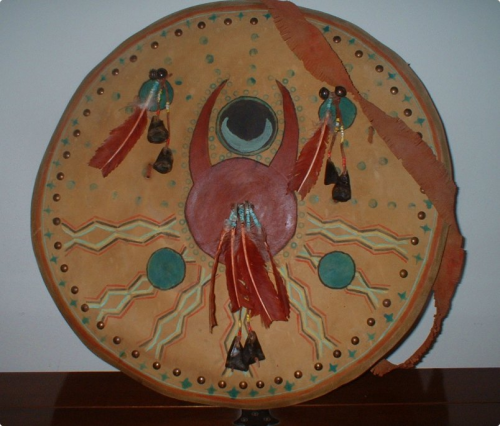
La preparazione di uno scudo includeva sia aspetti materiali come anche aspetti spirituali. I motivi da dipingere sullo scudo erano una espressione personale del guerriero. Essi potevano rappresentare una "Visione" avuta oppure invocare l'aiuto di un animale totemico o essere anche la rappresentazione di un atto di coraggio compiuto. Ma anche gli aspetti materiali avevano una loto importanza. La pelle grezza di bisonte era lavorata con colla animale su un fuoco insieme ad un fedele amico. Il calore restringeva la pelle che, mischiata con la colla, diventava dura abbastanza da proteggere da una freccia. Praticamente ogni Nazione Indiana aveva un metodo di costruzione particolare. Racconta Colin F. Taylor nel suo "Native American Weapons" come i Comanche preferissero realizzare i propri scudi con due dischi di pelle grezza cuciti su un anello di legno. Lo spazio fra i due dischi era poi riempito con crine di cavallo, erba, piume o altri materiali. Rimangono ovviamente seri dubbi sulla efficacia di un tale scudo contro la palla di un moschetto. E' stato riportato come i pionieri anglo-americani fossero rimasti stupiti dal rapido interessamento ai libri dei Comanche. E questo sin dai primi contatti. L'apparente amore per la cultura di quel popolo fu spiegato solo successivamente, quando uno dei loro scudi fu catturato in battaglia. Lo scudo infatti non aveva in mezzo ai due dischi di pelle grezza il solito materiale di riempimento ma tutte le pagine di un libro con l'intera storia di Roma!

----------------------

 The preparation of a shield included both material aspects as well as spiritual aspects. The designs to be painted on the shield were a personal expression of the warrior. They could be a "Vision", or invoke the help of a totemic animal, or even be a representation of a bravery. But even the material aspects had a lots of importance. The hide of a bison was processed with hide glue on a fire along with a faithful friend. Heat narrowed the skin mixed with glue and made it hard enough to be protected by an arrow. Virtually every Indian Nation had a particular construction method. Colin F. Taylor in his "Native American Weapons" say that the Comanche would prefer to make their shields with two rawhide discs sewn onto a wooden ring. The space between the two discs was then filled with horse hair, grass, feathers or other materials. Obviously there are serious doubts about the effectiveness of such a shield against a musket ball. It 'was reported as the Anglo-American pioneers were amazed by the rapid interest in the books by the Comanche. And this from the first contacts. The apparent love for the culture of that people was explained only later, when one of their shields was captured in battle. The shield had not in fact, between the two discs of raw hide, the usual materials but all the pages of a book with the entire history of Rome!

Uno scudo da me realizzato partendo da un originale Cheyenne
 

sabato 21 maggio 2011

L'Arma Cattiva


Una leggenda Blackfoot

Una volta Old Man stava cercando di guadare un fiume, quando la corrente lo trascinò a valle, facendogli perdere tutte le sue armi. Era molto affamato, così prese i primi rami che trovò, e fece un arco, delle frecce, ed una impugnatura per il coltello e la lancia. Quando ebbe finito, si avviò verso montagna. Ben presto vide un orso intento a scavare radici e pensò di divertirsi un po', così si nascose dietro un tronco e gridò: "Animale senza coda, cosa stai facendo?" L'orso alzò lo sguardo, ma, non vedendo nessuno, continuò a scavare. Allora Old Man gridò ancora: "Ciao, mangia terra!" nascondendosi subito alla sua vista. L'orso allora si mise a sedere di nuovo, ma questa volta vide Old Man ed iniziò a correre verso di lui. Old Man iniziò a lanciare frecce verso l'animale, ma le punte rimbalzavano soltanto sulla sua pelle, perchè il legno che aveva usato era marcio. Allora scagliò la sua lancia, ma anche questa era marcia, e si ruppe. Provò allora ad accoltellare l'orso, ma anche il manico del suo coltello si ruppe, allora si voltò e corse via, mentre l'orso lo inseguiva. Mentre correva, si guardò intorno per qualche arma, ma non ne trovò nemmeno una, neanche una pietra. Chiamò gli animali ad aiutarlo, ma nessuno venne. Era quasi senza respiro e l'orso era molto vicino a lui, quando improvvisamente vide il corno di un toro per terra. Lo raccolse, lo mise in testa, e, voltandosi, urlò così forte che l'orso corse via terrorizzato.

----------------------------------

A Blackfoot Legend

Once Old Man was fording a river, when the current carried him down stream, and he lost his weapons. He was very hungry, so he took the first wood he could find, and made a bow and arrows, and a handle for his knife and spear. When he had finished them, he started up a mountain. Pretty soon he saw a bear digging roots, and he thought he would have some fun, so he hid behind a log and called out, "No-tail animal, what are you doing?" The bear looked up, but, seeing no one, kept on digging. Then Old Man called out again, "Hi, you dirt-eater!" and then he dodged back out of sight. Then the bear sat up again, and this time he saw Old Man and ran after him. Old Man began shooting arrows at him, but the points only stuck in the skin, for the shafts were rotten and snapped off. Then he threw his spear, but that too was rotten, and broke. He tried to stab the bear, but his knife handle was also rotten and broke, so he turned and ran; and the bear pursued him. As he ran, he looked about for some weapon, but there was none, not even a rock. He called out to the animals to help him, but none came. His breath was almost gone, and the bear was very close to him, when he saw a bull's horn lying on the ground. He picked it up, placed it on his head, and, turning around, bellowed so loudly that the bear was scared and ran away.

sabato 14 maggio 2011

Dove Vive il Passato

Copricapo Lakota- NMAI museum-

Per chi volesse approfondire maggiormente la cultura materiale dei Nativi Americani o semplicemente guardare alcuni degli oggetti che essa ha prodotto ecco una serie di links ad alcuni dei maggiori musei. National Museum of the American Indians. Si può effettuare una ricerca per tipo di oggetto, cultura, materiali usati: 

http://www.americanindian.si.edu/searchcollections/home.aspx 

Splendid Heritage. Anche qui si possono scegliere di versi parametri di ricerca. Basta poi selezionare "Display" in alto a sinistra: 

http://www.splendidheritage.com/nindex.html 

Plains Indian Museum Collection del Buffalo Bill Museum, museo dedicato al famoso personaggio. Diverse le opzioni di ricerca: 

http://old.bbhc.org/collections/bbhc index_PIM.cfm?museum=PIM

Catalogo del Canadian Museum of Civilization, museo con una bellissima raccolta di manufatti, principalmente provenienti dall'area Nord del continente: 

http://collections.civilization.ca/public/pages/cmccpublic/emupublic/Query.php?lang=0

---------------------------

Here above some links to the most important Native Americans museums