giovedì 31 maggio 2012
Work In Progress
sabato 31 marzo 2012
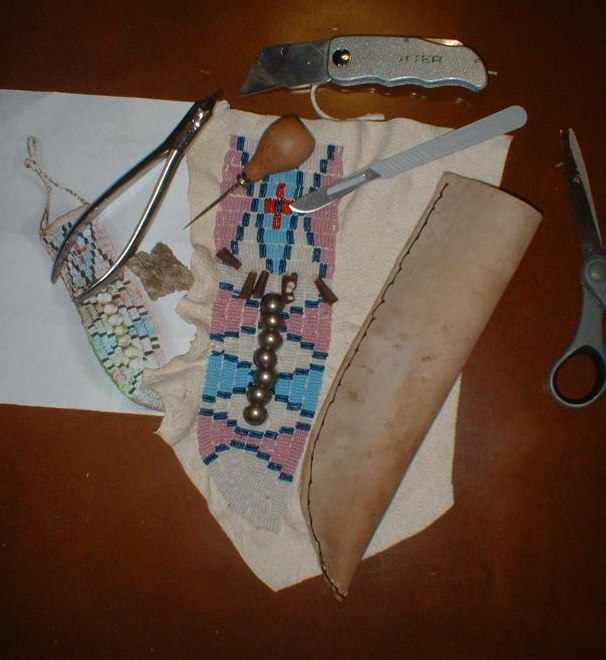
Tecnica Peyote
sabato 3 marzo 2012
Ancora Ornamenti
martedì 7 febbraio 2012
Windigo
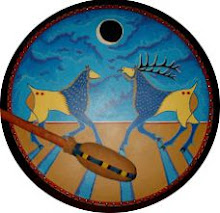
Un inverno una coppia appena sposata andava a caccia insieme ad altri del villaggio. Ma proprio mentre si trasferivano sul territorio di caccia nacque il bambino che aspettavano. Un giorno mentre giocavano con il piccolo dentro la sua culla, chiamandolo per nome, il bambino parlò loro. Erano molto sorpresi perché era troppo giovane per parlare. "Dove è Manidogisik (Spirito del Cielo)?" chiese il bambino. "Dicono che è molto potente e io un giorno andrò a fargli visita." Sua madre lo afferrò e gli disse: "Tu non devi parlare di Manido in quel modo!" Qualche sera dopo dormivano di nuovo con il bambino nella sua culla posta in mezzo a loro. Nel mezzo della notte la madre si svegliò e scoprì che il suo bambino era sparito. Si svegliò anche il marito e si alzò, accese il fuoco e guardò in tutto il wigwam. Cercarono anche fuori attorno al wigwam del vicino, ma non riuscirono a trovarlo. Accesero allora torce di corteccia di betulla e chiesero alle persone del villaggio di aiutarli a cercare delle tracce. Finalmente trovarono alcune tracce molto piccole che portavano al lago. A metà strada verso il lago, trovarono la culla ed ebbero la conferma che lo stesso bambino aveva lasciato quelle tracce, aveva strisciato fuori dalla sua culla ed era andato a cercare Manidogisik. Ma le tracce che portavano dalla culla fino al lago erano grandi, molto più grandi di quelle di piedi umani, e i genitori capirono che il loro bambino si era trasformato in un Windigo, il mostro terribile fatto di ghiaccio che poteva mangiare gli esseri umani. Ma Manidogisik aveva 50 piccoli esseri chiamati manidog per proteggerlo. Quando uno di questi manidog tirava una pietra, essa era come un fulmine. Appena il Windigo si avvicinò, i manidog lo sentirono arrivare e corsero incontro a lui cominciando a combattere. Alla fine lo buttarono giù con uno dei fulmini/pietra che potevano lanciare. Il Windigo cadde morto con lo schianto di un grande albero. Mentre giaceva a terra assomigliava ad un Indiano, anche se enorme, ma quando le persone iniziarono a tagliarlo in pezzi egli era come un enorme blocco di ghiaccio. Bruciarono e sciolsero tutti i suoi pezzi e trovarono così, nel centro del suo corpo, un bambino molto piccolo di circa sei centimetri di lunghezza con un buco in testa dove il manidog lo aveva colpito. Questo era il bambino che si era trasformato in un Windigo. Se il manidog non l'avesse ucciso, il Windigo avrebbe divorato l'intero villaggio.
(Da Robert E. Ritzenthaler and Pat Ritzenthaler, 1983, The Woodland Indians of the Western Great Lakes, Prospect Heights IL: Waveland Press.)
sabato 4 febbraio 2012
Alla moda Delle Pianure
Una serie di giacche in pelle provenienti da diverse tribù delle Pianure o dal Plateau.
sabato 28 gennaio 2012
Trade Beads
domenica 22 gennaio 2012
Le Piume di Dio
"In principio, il Grande Spirito diede agli animali e agli uccelli la sapienza e il potere di parlare con gli uomini. Egli mandò queste creature all'uomo per mostrarsi attraverso di esse. Loro avrebbero insegnato ad un prescelto le canzoni e le danze sacre, così come tutti i riti e le tradizioni. La creatura più amata dal Grande Spirito era l'aquila, e attraverso essa Egli raccontò la storia della vita. L'aquila, come sapete, ha solo due uova, e tutte le cose viventi del mondo sono divise in due. Uomo e donna, maschio e femmina e questo è vero per tutti gli animali, gli uccelli, gli alberi i fiori e così via. Tutte le cose sono figlie di questi due principi in modo che la vita possa continuare. L'uomo ha due occhi, due mani, due piedi ed ha anche un corpo ed un anima, una sostanza ed un ombra.Attraverso i suoi occhi, vede scene piacevoli e spiacevoli, attraverso le sue narici gli odori buoni e cattivi, con le sue orecchie sente le notizie liete e le parole che lo rendono triste. La sua mente è divisa tra il bene e il male. La sua mano destra può essere usata per il male, per la guerra o per colpire una persona in collera. Ma la sua mano sinistra, che è vicino al suo cuore, è sempre piena di gentilezza. Il suo piede destro può condurlo in una strada sbagliata, ma il suo piede sinistro lo porta sempre sulla via giusta. L'uomo è luce e tenebre, estate e inverno, pace e guerra, la vita e la morte. Per ricordare questa lezione di vita, guardate la grande aquila, l'uccello preferito del Grande Spirito. La piuma d'aquila è divisa in due parti, una parte è luce e l'altra oscurità. La piuma rappresenta la luce del giorno e le tenebre, l'estate e l'inverno, la pace e la guerra, la vita e la morte. Così per ricordare ciò che ho detto, osservate bene l'aquila e le sue piume, esse raccontano la storia della vita. Guardate le piume che tengo in mano, quella a destra è grande e perfetta ed è decorata, questa rappresenta l'uomo. Quella nella mia sinistra è piccola e semplice, essa rappresenta la donna. Figli miei, ricordate quello che dico. Perché siete VOI che sceglierete la via da seguire nella vita - la via giusta o quella sbagliata".
"In the beginning, the Great Spirit above gave to the animals and birds wisdom and knowledge and the power to talk to men. He sent these creatures to tell man that he showed himself through them. They would teach a chosen man sacred songs and dance, as well as much ritual and lore. The creature most loved by the Great Spirit was the eagle, for he tells the story of life. The Eagle, as you know, has only two eggs, and all living things in the world are divided into two. Here is man and woman, male and female and this is true with animals, birds, trees, flowers and so on. All things have children of two kinds so that life may continue. Man has two eyes, two hands, two feet and he has a body and soul, substance and shadow.Through his eyes, he sees pleasant and unpleasant scenes, through his nostrils he smells good and bad odors, with his ears he hears joyful news and words that make him sad. His mind is divided between good and evil. His right hand he may often use for evil, such as war or striking a person in anger. But his left hand, which is near his heart, is always full of kindness. His right foot may lead him in the wrong path, but his left foot always leads him the right way, and so it goes; he has daylight and darkness, summer and winter, peace and war, and life and death. In order to remember this lesson of life, look to the great eagle, the favorite bird of the Great Spirit. The eagle feather is divided into two parts, part light, and part dark. This represents daylight and darkness, summer and winter, peace and war, and life and death. So that you may remember what I have told you, look well on the eagle, for his feathers, too, tell the story of life. Look at the feathers I wear upon my hand, the one on the right is large and perfect and is decorated; this represents man. The one on my left is small and plain; this represents woman. The eagle feather is divided into two parts, dark and white. This represents daylight and darkness, summer and winter. For the white tells of summer, when all is bright and the dark represents the dark days of winter. My children, remember what I tell you. For it is YOU who will choose the path in life you will follow -- the good way, or the wrong way".
martedì 13 dicembre 2011
Work in progress
domenica 11 dicembre 2011
Le Armi e le Insegne
Nel Plateau, ma anche frai Crow, era poi uso comune quello di aggiungere una fascia in pelle riccamente decorata al fine di meglio impugnare l'attrezzo ed ottenere un effetto maggiore.
I Nativi generalmente non usavano la frusta per colpire il cavallo, quanto piuttosto per farla schioccare in aria per incitarlo, ma qualunque fosse l'utilizzo essa era un forte indicatore dello status sociale del suo proprietario. E per questo per realizzarla erano usati materiali pregiati e lo stesso corno per una buona frusta doveva provenire solo da quella specie particolarmente imponente di cervo che i bianchi avrebbero poi chiamato Washington deer. Questa a seguire è una frusta su cui sto lavorando.
In the Plateau, but also among the Crow, was also common to add a beaded leather band in order to better grasp the whip and get a stronger effect.
Natives generally did not use the whip to hit the horse, but rather to make it pop up in the air to encourage the horse, but whatever was the use it was a strong indicator of the social status of its owner. And for this high-quality materials were used and the same horn for a good whip should only come from a particularly impressive deer species that whites would then called Washington deer. This is an antler quirt I'm still working on.
domenica 4 dicembre 2011
Puzzle Bag
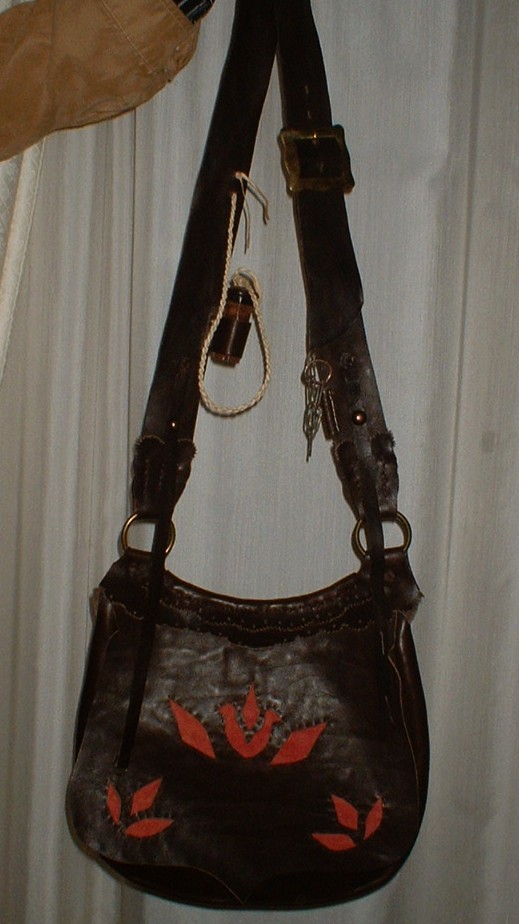
Ecco un altra borsa nello stile utilizzato sul finire del 700 negli States. Erano borse dette anche "German bags" perchè la loro origine era in Germania o " Puzzle bags" perchè costruite assemblando diversi strati di pellami.
Questa in particolare ha le due cinghie a cui andava appeso il corno per la polvere da sparo nonchè un dosatore per la stessa polvere ed un attrezzo in ferro forgiato per la pulizia del punto in cui avveniva l'innesco nel fucile. Il tutto era fissato alla tracolla della borsa per poter ricaricare più velocemente il fucile ad avancarica.
Here's another bag in a style common at the end of the 700 in the States. These bags were also called "German bags" 'cause their origin was in Germany or "Puzzle bags" because they were built by assembling several layers of leather.
This particular one has two straps to hang on the gunpowder horn as well a powder measure and an iron forged a tool to clean the seat of the flint on the muzzle-loading rifle . Everything was fixed to the strap of the bag to re load faster.
martedì 18 ottobre 2011
Il Gioco degli Angeli

Fra il '700 e l'800, quando la popolazione iniziò a crescere nel numero e gli insediamenti a svilupparsi, gli emigranti inglesi e tedeschi portarono sulle nuove colonie americane quelle che erano le tradizioni artigianali già presenti nei rispettivi paesi di origine. Fra queste l'arte e gli stili della lavorazione delle borse in cuoio destinate alla caccia. Questa mia borsa riprende un originale creato da un grande artista americano sullo stile di quelle usate sul finire del '700 sui nuovi territori americani. Il nome della borsa è: Angels Game.
Un grazie speciale va ai miei due modelli di eccezione: Josey e Cappy!
------------------------------------
Between '700 and '800, when the population began to grow in number and the settlements to develop, the British and German immigrants brought in the new American colonies the craft traditions they already had in their countries. Among these styles of art and workmanship there were the so called hunting bags or pouches. This my bag is made starting from an original one made by a great American artist in the style of those used at the end of '700 on the new American territories. Its named: Angels Game.
A special thanks goes to my two very special models: Josey and Cappy!


venerdì 7 ottobre 2011
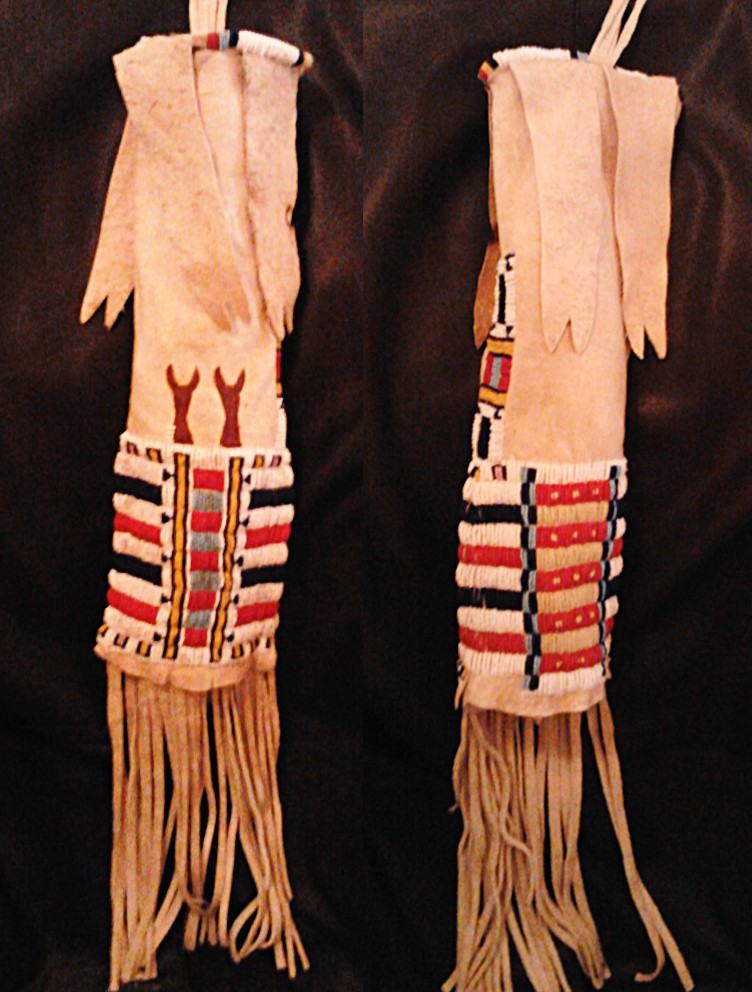
Ancora foderi...
mercoledì 24 agosto 2011
Coltelli Indiani
A series of knives and blades made according to the Native People techniques. Some are original while others are replicas or originals of the highest quality. You can see these and other knives (and purchase them directly from the artists) on this site: