martedì 13 dicembre 2011

Work in progress


Un aggiornamento sul progresso del lavoro. Decorare a perline richiede molta pazienza. Una specie di meditazione.
----------------------------------------------------
Work in progress. Beadworking needs a lot of patience. Kind of a meditation.


domenica 11 dicembre 2011

Le Armi e le Insegne

Frusta Crow - 1880 -

Un artwork di Angela Swedberg
Fra molti popoli Nativi, e specialmente nel Nord Ovest del Paese, era diffuso l'utilizzo di un particolare tipo di frusta detta in inglese Antler quirt. Essa era ricavata dal corno di un cervo che era prima lucidato e poi lentamente inciso secondo una tecnica che sarebbe stata detta solo successivamente Scrimshaw. La tecnica prevedeva di realizzare i motivi scelti praticando delle incisioni di pochi millimetri e di poi riempire le stesse con del materiale colorante misto a colla animale o grassi, in modo da far meglio risaltare il disegno.
Nel Plateau, ma anche frai Crow, era poi uso comune quello di aggiungere una fascia in pelle riccamente decorata al fine di meglio impugnare l'attrezzo ed ottenere un effetto maggiore.
I Nativi generalmente non usavano la frusta per colpire il cavallo, quanto piuttosto per farla schioccare in aria per incitarlo, ma qualunque fosse l'utilizzo essa era un forte indicatore dello status sociale del suo proprietario. E per questo per realizzarla erano usati materiali pregiati e lo stesso corno per una buona frusta doveva provenire solo da quella specie particolarmente imponente di cervo che i bianchi avrebbero poi chiamato Washington deer. Questa a seguire è una frusta su cui sto lavorando.


--------------------------------------------
Among many Native peoples, and especially in the North West of the country, was common a particular type of whip known as Antler quirt. It was made ​​from the horn of a deer that was first polished and then slowly etched according to a technique that would be known only later as Scrimshaw. The technique involved to realize the motifs by practicing a few millimeters incisions and then to fill it with coloring material mixed with animal glue or grease, to better highlight the design.
In the Plateau, but also among the Crow, was also common to add a beaded leather band in order to better grasp the whip and get a stronger effect.
Natives generally did not use the whip to hit the horse, but rather to make it pop up in the air to
encourage the horse, but whatever was the use it was a strong indicator of the social status of its owner. And for this high-quality materials were used and the same horn for a good whip should only come from a particularly impressive deer species that whites would then called Washington deer. This is an antler quirt I'm still working on.


domenica 4 dicembre 2011

Puzzle Bag


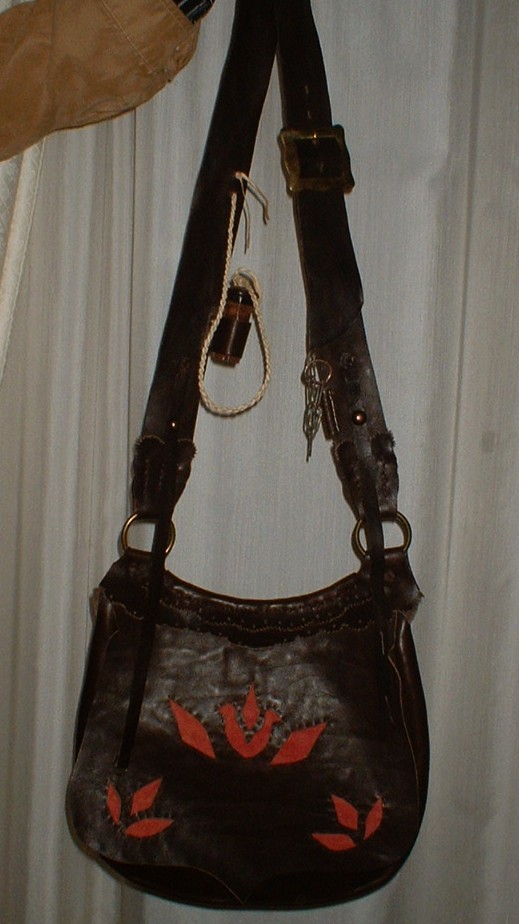
Ecco un altra borsa nello stile utilizzato sul finire del 700 negli States. Erano borse dette anche "German bags" perchè la loro origine era in Germania o " Puzzle bags" perchè costruite assemblando diversi strati di pellami.
Questa in particolare ha le due cinghie a cui andava appeso il corno per la polvere da sparo nonchè un dosatore per la stessa polvere ed un attrezzo in ferro forgiato per la pulizia del punto in cui avveniva l'innesco nel fucile. Il tutto era fissato alla tracolla della borsa per poter ricaricare più velocemente il fucile ad avancarica.

-------------------------------------

Here's another bag in a style common at the end of the 700 in the States. These bags were also called "German bags" 'cause their origin was in Germany or "Puzzle bags" because they were built by assembling several layers of leather.
This particular one has two straps to hang on the gunpowder horn as well a powder measure and an iron forged a tool to clean the seat of the flint on the muzzle-loading rifle . Everything was fixed to the strap of the bag to re load faster.

martedì 18 ottobre 2011

Il Gioco degli Angeli


Fra il '700 e l'800, quando la popolazione iniziò a crescere nel numero e gli insediamenti a svilupparsi, gli emigranti inglesi e tedeschi portarono sulle nuove colonie americane quelle che erano le tradizioni artigianali già presenti nei rispettivi paesi di origine. Fra queste l'arte e gli stili della lavorazione delle borse in cuoio destinate alla caccia. Questa mia borsa riprende un originale creato da un grande artista americano sullo stile di quelle usate sul finire del '700 sui nuovi territori americani. Il nome della borsa è: Angels Game.

Un grazie speciale va ai miei due modelli di eccezione: Josey e Cappy!

------------------------------------

Between '700 and '800, when the population began to grow in number and the settlements to develop, the British and German immigrants brought in the new American colonies the craft traditions they already had in their countries. Among these styles of art and workmanship there were the so called hunting bags or pouches. This my bag is made starting from an original one made by a great American artist in the style of those used at the end of '700 on the new American territories. Its named: Angels Game.

A special thanks goes to my two very special models: Josey and Cappy!

venerdì 7 ottobre 2011

Ancora foderi...


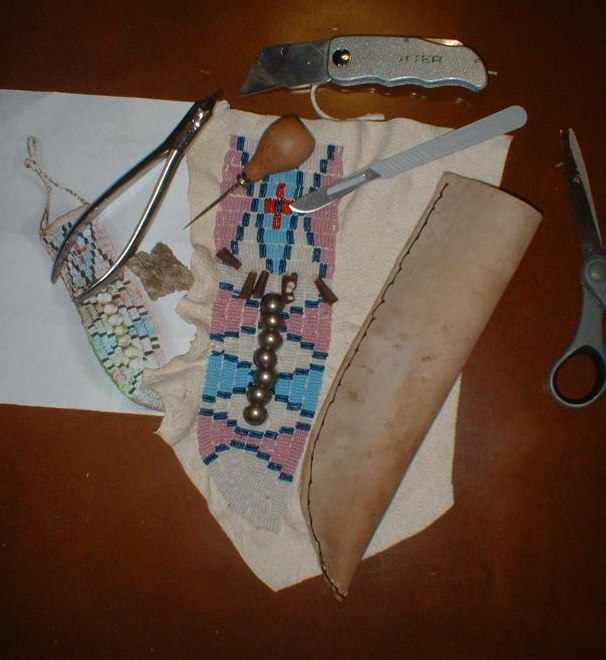
Alcune fasi nella realizzazione della replica di un fodero originale. L'interno è in cuoio mentre l'esterno, decorato a perline, è in pelle a concia Indiana. All'inizio della pagina alcuni foderi realizzati da Angela Swedberg.
-----------------------

Some steps in the making of a knife sheat replica. The case inside is made with raw hide while the beaded case is made with brain tanned hide. At the top of the page some knife sheaths made ​​by Angela Swedberg


mercoledì 24 agosto 2011

Coltelli Indiani

 Dagger Sheat

Una serie di coltelli e foderi realizzati secondo le tecniche proprie degli Indiani d' America.
Alcuni sono originali mentre altri sono repliche o prodotti originali di altissima qualità che è possibile vedere (ed eventualmente acquistare direttamente dagli artisti) su questo sito: 
http://contemporarymakers.blogspot.com/
----------------------------------

A series of knives and blades made according to the Native People techniques. Some are original while others are replicas or originals of the highest quality. You can see these and other knives (and purchase them directly from the artists) on this site:
http://contemporarymakers.blogspot.com/


mercoledì 3 agosto 2011

Iniskim, la Roccia che Chiamò il Bisonte


Una tradizione Blackfoot: 

"Anche se la nostra gente aveva iniziato a vivere nel modo in cui i Makoyi (i lupi) ci avevano mostrato, la vita era ancora molto dura ed il popolo soffriva spesso la fame. Un giorno Iinii (il Bisonte) ebbe pietà della nostra gente.  Fu così che una donna chiamata Donnola, mente stava raccogliendo l'acqua da un fiume vicino il campo,  sentì qualcosa chiamarla dai cespugli. Guardando meglio scoprì che a parlarle era una pietra. La pietra le spiegò come essa stessa potesse essere usata in una cerimonia che avrebbe attirato i bisonti verso un pisskan (dirupo dal quale erano fatti cadere giù). Donnola prese Iniskim, la Pietra che Chiama il Bisonte, e la portò al campo. La donna raccontò ai leaders spirituali della cerimonia per chiamare i bisonti. Il popolo seguì le sue istruzioni e presto ebbe una grande quantità di carne per nutrirsi e nuove pelli per le sue tende. Ci sono molti Iniskim nella Prateria. Molte persone li conservano ancora in involucri sacri. Noi invochiamo l'Iniskim perchè ci aiuti ad avere successo nella vita".

L'Iniskim è una pietra fossile (Ammolite) la cui forma ricorda un bisonte.

------------------------------

 "Although our people began to live as Makoyi (wolves) had shown them, life was still very hard and the people were often hungry. One day Iinii (buffalo) took pity on our people.  A lady named Weasel Woman was collecting water from a river near her camp when she heard something calling to her from the bushes. When she looked closer, she found a stone that spoke to her. The stone explained how it could be used in a ceremony that would call the buffalo towards a pisskan (buffalo jump). Weasel Woman took the Iniskim, the buffalo calling stone, back to camp. She told the spiritual leaders about the ceremony to call the buffalo. The people followed her instructions and soon they had plenty of meat and many hides for new lodge covers.  There are numerous Iniskim on the prairies. Many people still keep them as sacred bundles. We call on iniskim to help us have successful lives".

The Iniskim is a fossil stone (Ammolite) whose shape resembles a buffalo.

Una borsa da me realizzata per la mia Iniskim

a bag I made for my Iniskim, a gift from a very dear friend