martedì 18 ottobre 2011

Il Gioco degli Angeli


Fra il '700 e l'800, quando la popolazione iniziò a crescere nel numero e gli insediamenti a svilupparsi, gli emigranti inglesi e tedeschi portarono sulle nuove colonie americane quelle che erano le tradizioni artigianali già presenti nei rispettivi paesi di origine. Fra queste l'arte e gli stili della lavorazione delle borse in cuoio destinate alla caccia. Questa mia borsa riprende un originale creato da un grande artista americano sullo stile di quelle usate sul finire del '700 sui nuovi territori americani. Il nome della borsa è: Angels Game.

Un grazie speciale va ai miei due modelli di eccezione: Josey e Cappy!

------------------------------------

Between '700 and '800, when the population began to grow in number and the settlements to develop, the British and German immigrants brought in the new American colonies the craft traditions they already had in their countries. Among these styles of art and workmanship there were the so called hunting bags or pouches. This my bag is made starting from an original one made by a great American artist in the style of those used at the end of '700 on the new American territories. Its named: Angels Game.

A special thanks goes to my two very special models: Josey and Cappy!

venerdì 7 ottobre 2011

Ancora foderi...


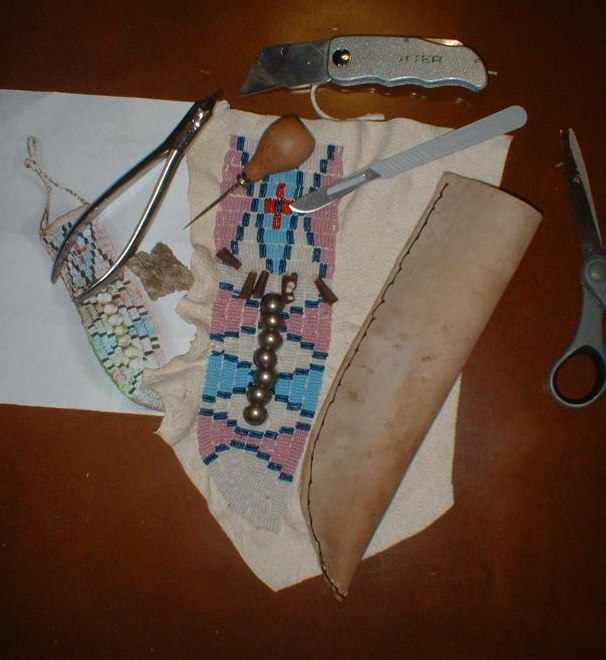
Alcune fasi nella realizzazione della replica di un fodero originale. L'interno è in cuoio mentre l'esterno, decorato a perline, è in pelle a concia Indiana. All'inizio della pagina alcuni foderi realizzati da Angela Swedberg.
-----------------------

Some steps in the making of a knife sheat replica. The case inside is made with raw hide while the beaded case is made with brain tanned hide. At the top of the page some knife sheaths made ​​by Angela Swedberg


mercoledì 24 agosto 2011

Coltelli Indiani

 Dagger Sheat

Una serie di coltelli e foderi realizzati secondo le tecniche proprie degli Indiani d' America.
Alcuni sono originali mentre altri sono repliche o prodotti originali di altissima qualità che è possibile vedere (ed eventualmente acquistare direttamente dagli artisti) su questo sito: 
http://contemporarymakers.blogspot.com/
----------------------------------

A series of knives and blades made according to the Native People techniques. Some are original while others are replicas or originals of the highest quality. You can see these and other knives (and purchase them directly from the artists) on this site:
http://contemporarymakers.blogspot.com/


mercoledì 3 agosto 2011

Iniskim, la Roccia che Chiamò il Bisonte


Una tradizione Blackfoot: 

"Anche se la nostra gente aveva iniziato a vivere nel modo in cui i Makoyi (i lupi) ci avevano mostrato, la vita era ancora molto dura ed il popolo soffriva spesso la fame. Un giorno Iinii (il Bisonte) ebbe pietà della nostra gente.  Fu così che una donna chiamata Donnola, mente stava raccogliendo l'acqua da un fiume vicino il campo,  sentì qualcosa chiamarla dai cespugli. Guardando meglio scoprì che a parlarle era una pietra. La pietra le spiegò come essa stessa potesse essere usata in una cerimonia che avrebbe attirato i bisonti verso un pisskan (dirupo dal quale erano fatti cadere giù). Donnola prese Iniskim, la Pietra che Chiama il Bisonte, e la portò al campo. La donna raccontò ai leaders spirituali della cerimonia per chiamare i bisonti. Il popolo seguì le sue istruzioni e presto ebbe una grande quantità di carne per nutrirsi e nuove pelli per le sue tende. Ci sono molti Iniskim nella Prateria. Molte persone li conservano ancora in involucri sacri. Noi invochiamo l'Iniskim perchè ci aiuti ad avere successo nella vita".

L'Iniskim è una pietra fossile (Ammolite) la cui forma ricorda un bisonte.

------------------------------

 "Although our people began to live as Makoyi (wolves) had shown them, life was still very hard and the people were often hungry. One day Iinii (buffalo) took pity on our people.  A lady named Weasel Woman was collecting water from a river near her camp when she heard something calling to her from the bushes. When she looked closer, she found a stone that spoke to her. The stone explained how it could be used in a ceremony that would call the buffalo towards a pisskan (buffalo jump). Weasel Woman took the Iniskim, the buffalo calling stone, back to camp. She told the spiritual leaders about the ceremony to call the buffalo. The people followed her instructions and soon they had plenty of meat and many hides for new lodge covers.  There are numerous Iniskim on the prairies. Many people still keep them as sacred bundles. We call on iniskim to help us have successful lives".

The Iniskim is a fossil stone (Ammolite) whose shape resembles a buffalo.

Una borsa da me realizzata per la mia Iniskim

a bag I made for my Iniskim, a gift from a very dear friend


sabato 23 luglio 2011

La Memoria Al Petto

Amuleto proveniente dalle Pianure del Nord

forma "a diamante"

Un mio amuleto "a diamante" . E' realizzato con pelle a concia Indiana, ermellino, perline seme di inizio '900, perle "Prosser" e in ottone. Ho realizzato il motivo al centro pensando ad una amica.

--------------------

A fetish I made in a "diamond" shape. It's made with brain tanned hide, ermine strips, old seed beads, "Prosser" beads and brass beads. I had a friend in mind when I made it.


domenica 17 luglio 2011

Buffalo Pouch


"Buffalo Hunt on the Southwestern Prairies', 

olio su tela, John Mix Stanley, 1845

Una borsa da me realizzata. I suoi decori rappresentano gli zoccoli e le tracce lasciate dal bisonte.

-----------------------------------

A pouch just finished. It's made out from brain tanning deer hide. It has buffalo hooves and tracks  beaded on it.


lunedì 13 giugno 2011

La Cultura Dei Comanche


Scudo Cheyenne

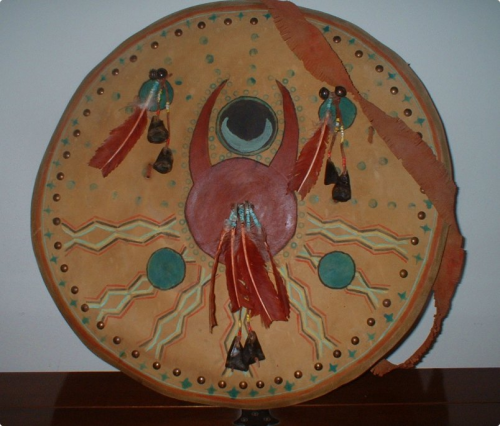
La preparazione di uno scudo includeva sia aspetti materiali come anche aspetti spirituali. I motivi da dipingere sullo scudo erano una espressione personale del guerriero. Essi potevano rappresentare una "Visione" avuta oppure invocare l'aiuto di un animale totemico o essere anche la rappresentazione di un atto di coraggio compiuto. Ma anche gli aspetti materiali avevano una loto importanza. La pelle grezza di bisonte era lavorata con colla animale su un fuoco insieme ad un fedele amico. Il calore restringeva la pelle che, mischiata con la colla, diventava dura abbastanza da proteggere da una freccia. Praticamente ogni Nazione Indiana aveva un metodo di costruzione particolare. Racconta Colin F. Taylor nel suo "Native American Weapons" come i Comanche preferissero realizzare i propri scudi con due dischi di pelle grezza cuciti su un anello di legno. Lo spazio fra i due dischi era poi riempito con crine di cavallo, erba, piume o altri materiali. Rimangono ovviamente seri dubbi sulla efficacia di un tale scudo contro la palla di un moschetto. E' stato riportato come i pionieri anglo-americani fossero rimasti stupiti dal rapido interessamento ai libri dei Comanche. E questo sin dai primi contatti. L'apparente amore per la cultura di quel popolo fu spiegato solo successivamente, quando uno dei loro scudi fu catturato in battaglia. Lo scudo infatti non aveva in mezzo ai due dischi di pelle grezza il solito materiale di riempimento ma tutte le pagine di un libro con l'intera storia di Roma!

----------------------

 The preparation of a shield included both material aspects as well as spiritual aspects. The designs to be painted on the shield were a personal expression of the warrior. They could be a "Vision", or invoke the help of a totemic animal, or even be a representation of a bravery. But even the material aspects had a lots of importance. The hide of a bison was processed with hide glue on a fire along with a faithful friend. Heat narrowed the skin mixed with glue and made it hard enough to be protected by an arrow. Virtually every Indian Nation had a particular construction method. Colin F. Taylor in his "Native American Weapons" say that the Comanche would prefer to make their shields with two rawhide discs sewn onto a wooden ring. The space between the two discs was then filled with horse hair, grass, feathers or other materials. Obviously there are serious doubts about the effectiveness of such a shield against a musket ball. It 'was reported as the Anglo-American pioneers were amazed by the rapid interest in the books by the Comanche. And this from the first contacts. The apparent love for the culture of that people was explained only later, when one of their shields was captured in battle. The shield had not in fact, between the two discs of raw hide, the usual materials but all the pages of a book with the entire history of Rome!

Uno scudo da me realizzato partendo da un originale Cheyenne